

Marketing sourced pipeline: what it is and how to measure it

Every lean B2B team knows the awkward pipeline meeting where marketing reports one number and sales reports another. The two numbers somehow add up to more than the total pipeline in the CRM.
Marketing sourced pipeline is the total value of open sales opportunities whose first qualifying touch came from a marketing activity, measured with first-touch attribution.
The first-touch definition answers only one question, which is which team or channel started a given deal. When marketing and sales both claim the same deals, the CEO and CFO stop trusting both numbers.
This post will give you a written counting rule, honest benchmarks, and a side-by-side reporting format that sales and finance can both accept. Read on to see where content fits into the picture.
Key takeaways
- Clear definition: The sourced number counts only the open deals that a marketing touch started first.
- Never add them: Adding sourced and influenced pipeline together double counts the same deals.
- Motion-based benchmarks: A healthy marketing sourced share depends on your go-to-market motion.
Marketing sourced pipeline, defined
In plain terms, a deal belongs in the marketing sourced column when a marketing activity started the deal before sales or a partner touched the account. Later touches from sales do not change that original credit.
What counts as a marketing sourced opportunity?
An opportunity counts as marketing sourced when the deal's first qualifying touch is a marketing activity. The five common cases below show where the line falls between marketing and sales.
- Content downloads: A guide download that later becomes a qualified opportunity counts as marketing sourced.
- Webinars and events: A webinar registration or event badge scan that starts a deal counts as marketing sourced.
- Paid and organic: A paid ad click or organic visit that converts on a form counts as marketing sourced.
- Sales outbound: A deal that an SDR started with cold outreach counts as sales sourced instead.
- Partners and expansion: Partner referrals and customer upsells do not count as marketing sourced by default.
Edge cases need a written rule that both teams sign off on before the first report goes out. A cold inbound lead from an account that sales was already prospecting is the most common example.
Expansion deals deserve their own line in the report as well. Tracking net-new logos separately from upsells keeps existing customers from inflating the sourced number.
How is marketing sourced revenue different from marketing sourced pipeline?
Marketing sourced revenue is the closed-won revenue from opportunities that began with a marketing activity. Marketing sourced pipeline measures the value of those same opportunities while the deals are still open.
The open pipeline figure is a leading indicator that shows what marketing has started this quarter. The closed revenue figure is the lagging proof that those deals actually turned into money.
For example, a webinar lead that becomes a qualified opportunity in March adds to sourced pipeline in March. The same deal adds to sourced revenue only when the deal closes, which could be months later.
Many marketing leaders distrust the revenue label because a single first touch rarely closes a B2B deal on its own. Report sourced revenue as a direction check, not as proof that marketing closed the deal alone.
Measuring marketing sourced pipeline
A lean B2B team can measure sourced deals in a basic CRM without hiring a RevOps specialist. The five steps below cover the full process from rule to report.
How do you write the sourcing rule down?
Define the first qualifying touch in writing and agree on the definition with sales before reporting any number. A one-page rule that lists what counts, what does not, and the edge cases prevents most credit fights.
Why should you lock the original source field?
Capture each contact's first-touch source when the contact enters the CRM, and never let anyone overwrite that field. An overwritten source field turns a webinar lead into a sales lead the moment an SDR logs a call.
How do you standardize campaign tags?
Use one UTM and campaign naming convention across ads, email, content, and events. Consistent tags let the CRM group every touch under the right channel instead of scattering touches across several spellings of one campaign.
When should campaigns be attached to a deal?
Link the campaign and the contact to each deal on the day the deal is created, not months later. Late associations depend on memory, and memory usually credits whichever team speaks loudest in the pipeline review.
How do you sum open opportunity value by source?
Add up the open opportunity value where the original source is marketing, and report the total every month. Set a fixed lookback window before opportunity creation, so every month's report judges first touches the same way.
What percentage of pipeline should marketing source?
Marketing sourced pipeline benchmarks depend on the go-to-market motion, so a borrowed benchmark can set an impossible target. The table below shows typical ranges for each motion.
| Go-to-market motion | Marketing sourced share of pipeline |
| Inbound-led SaaS | 50 to 60 percent |
| Product-led growth | 50 to 60 percent |
| Mid-market mixed motion | 30 to 50 percent |
| Enterprise outbound-heavy | 20 to 35 percent |
| Account-based marketing and strategic accounts | 5 to 20 percent |
Inbound-led and product-led companies sit at the top of the table because buyers find the product before sales reaches out. Enterprise and account-based motions sit lower because sales targets named accounts before marketing creates a first touch.
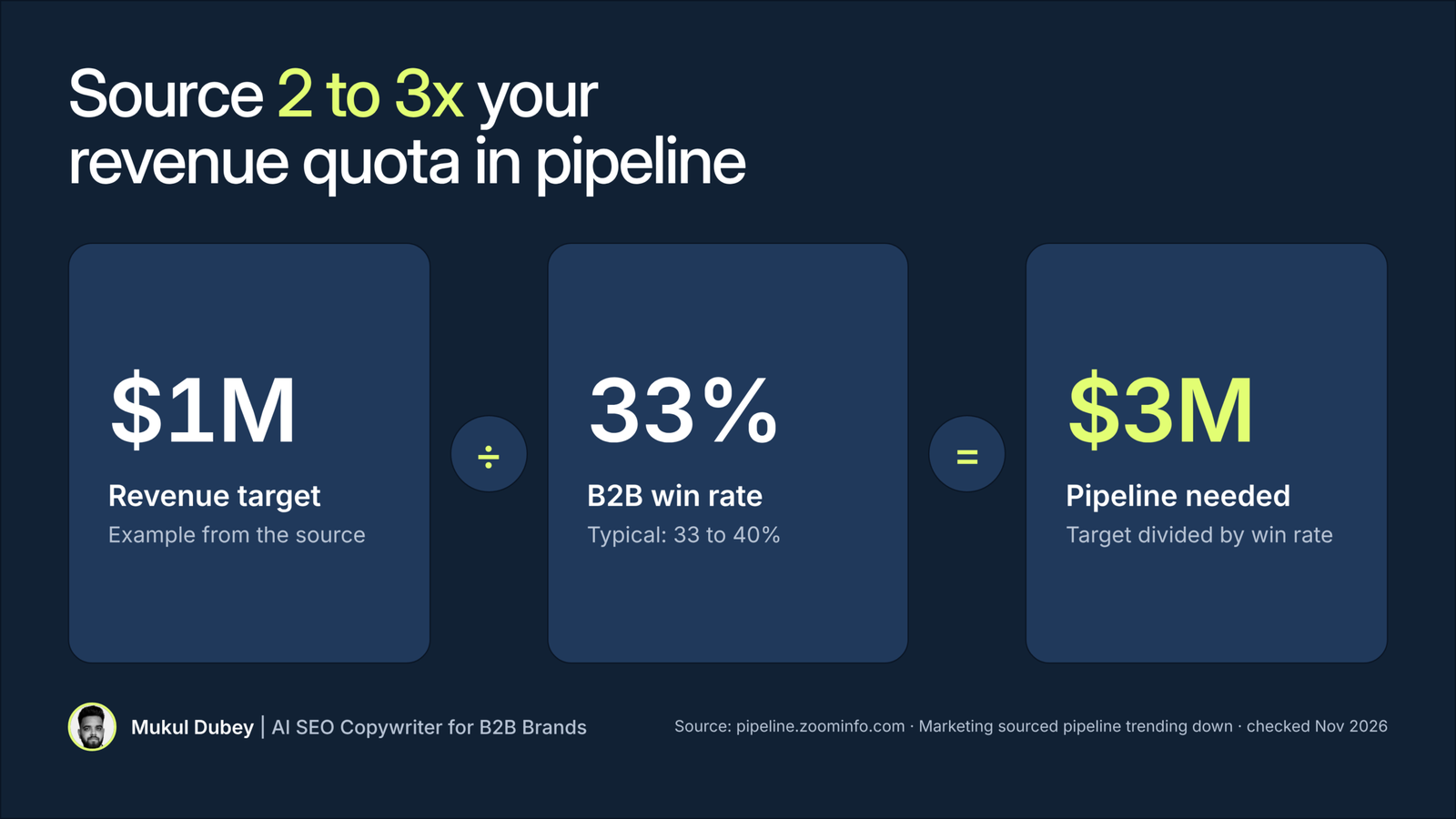
A common planning rule asks marketing to source two to three times its revenue quota in pipeline. Typical B2B win rates of 33 to 40 percent mean most deals never close, so the extra coverage protects the revenue target.
What CRM data do you need before you trust the number?
A marketing sourced pipeline number is only as reliable as the CRM data underneath the number. Run the five checks below before sharing the figure with a founder or CFO.
- Locked source field: Every contact keeps the original source captured on first entry into the CRM.
- Contact on every deal: Every opportunity has a linked contact, so the original source carries over.
- Clean campaign statuses: Campaign statuses separate real responses, such as registrations, from simple email sends.
- No orphan deals: Opportunities created without a linked contact get fixed in a weekly hygiene review.
- Deduplicated records: Duplicate contacts get merged, so one buyer never carries two different sources.
A quick monthly audit of a few random deals shows whether the five CRM habits hold. When the recorded source does not match the deal story that sales tells, fix the data before sending the report.
Sourced vs influenced pipeline
Marketing sourced pipeline measures which touch started a deal, while marketing influenced pipeline measures which touches helped the deal move forward. The two metrics answer different questions, so each metric needs its own column.
| Marketing sourced pipeline | Marketing influenced pipeline | |
| Question it answers | What started this deal? | What helped this deal progress or close? |
| Attribution model | First touch | Multi-touch: linear, U-shaped, W-shaped, or time-decay |
| Credit rule | All-or-nothing credit | Shared credit across touches |
| Best for | Measuring demand creation | Measuring deal acceleration |
| Main risk | Undercounts in enterprise and ABM motions | Overcounts when touch rules are loose |
The sourced column rewards demand creation, which suits teams whose main job is opening new conversations. The influenced column rewards acceleration and shows how campaigns help deals that sales already started.
Every sourced opportunity is also an influenced opportunity, so adding the two numbers double counts the same deals. A clean report shows the overlap and keeps total credit at or below 100 percent of revenue.
Content that creates sourced pipeline for lean teams
A blog post sources pipeline when a reader converts on a demo form, and influences pipeline during an existing deal. Three page types carry most of the load.
Why do bottom-of-funnel pages source the most pipeline?
Comparison pages, alternatives pages, and pricing explainers reach buyers who are already choosing a vendor. In my experience, those pages earn the first qualifying touch more often than any top-of-funnel guide.
A founder who reads an honest comparison page and then books a demo creates a marketing sourced pipeline in one visit. Write those pages before broad thought-leadership posts when pipeline is the goal.
How does search and AI visibility create a first touch?
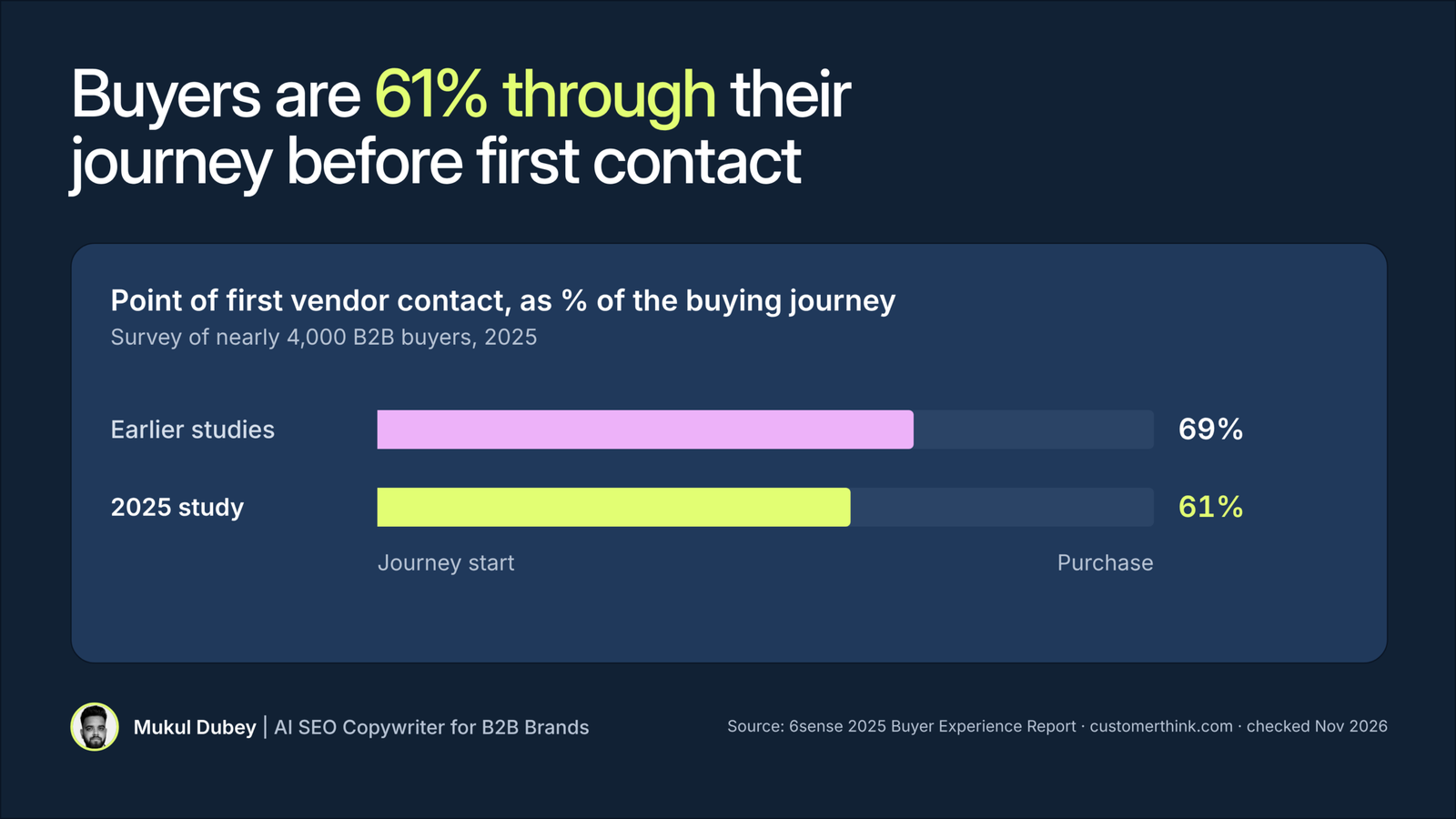
Pages that rank in search and get cited by AI assistants reach buyers before sales knows the account exists. A buyer who asks an AI assistant for vendor options may land on your page as the first touch.
Clear definitions, comparison tables, and direct answers make a page easier for AI assistants to quote. A B2B content strategy that ranks in search and gets cited by AI puts those elements into one plan.
Why should you refresh posts that already convert?
Updating a post that already converts readers protects the pipeline that the post is already sourcing. Outdated screenshots, stale pricing, or broken forms steadily cut the number of demo requests a strong post sends.
Start each quarter by listing the posts that appear most often as an original source in the CRM. Refresh those posts first, because each refresh defends existing deal flow instead of chasing new traffic.
Why shouldn't marketing sourced pipeline be your only KPI?
First-touch sourcing becomes risky when a team treats the sourced number as its only measure of success. Three structural problems show up in most B2B teams sooner or later.
- Volume over revenue: A first-touch KPI rewards lead volume even when those leads never close.
- Credit fights: A first-touch KPI sets marketing against sales over who owns each deal.
- Simplified buying journeys: A first-touch KPI ignores the many touches inside B2B buying groups.
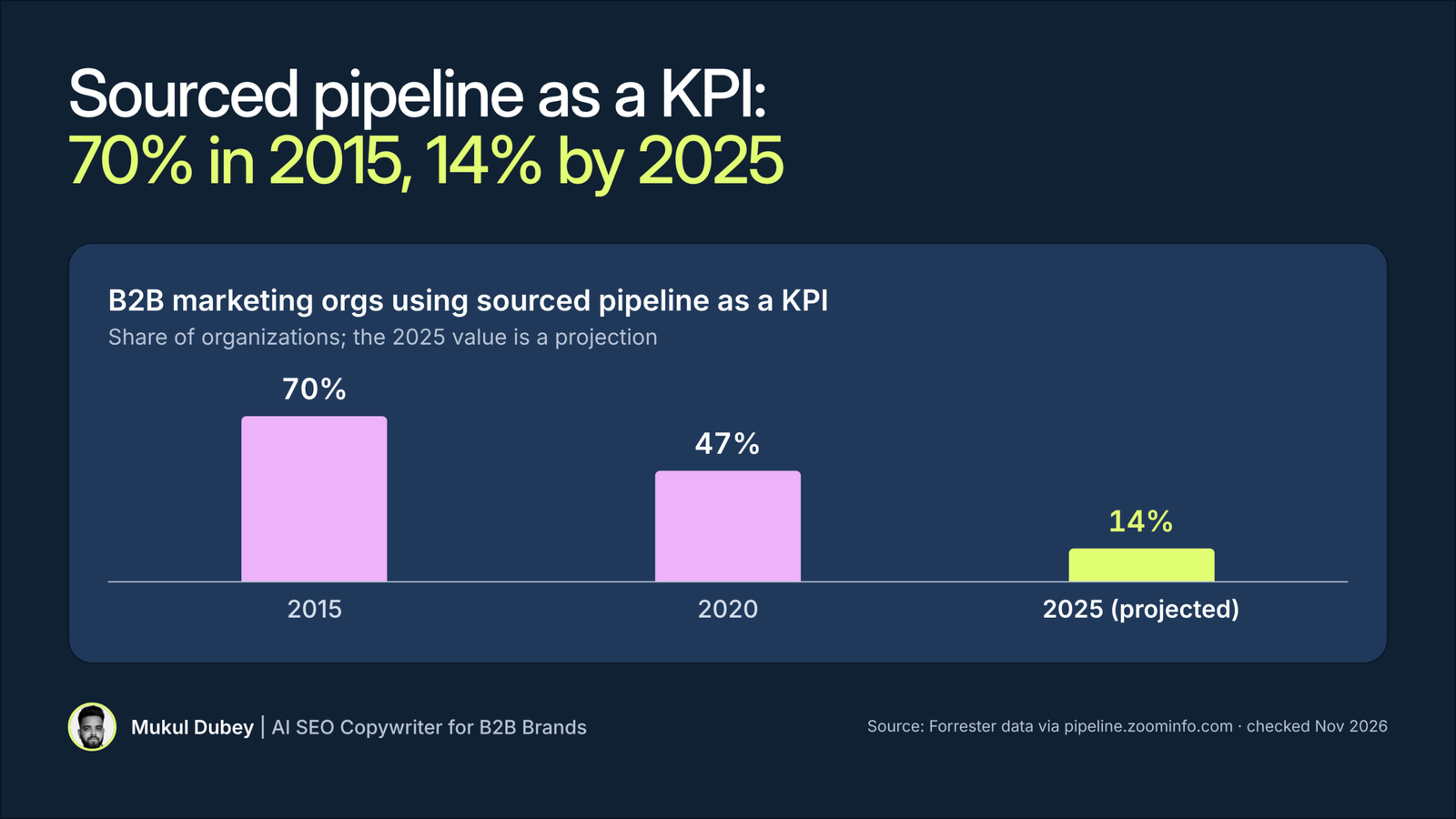
B2B marketing leaders tend to move away from first-touch sourcing as their primary KPI over the past decade. The shift happened because buying groups grew larger and fewer deals started with one clean touch.
A more useful view groups pipeline by how the buying group entered, such as a declared-intent demo request or a cold outbound sequence. The intent-based view rewards buyer intent instead of rewarding whichever department logged the first touch.
How does self-reported attribution fill the tracking gaps?
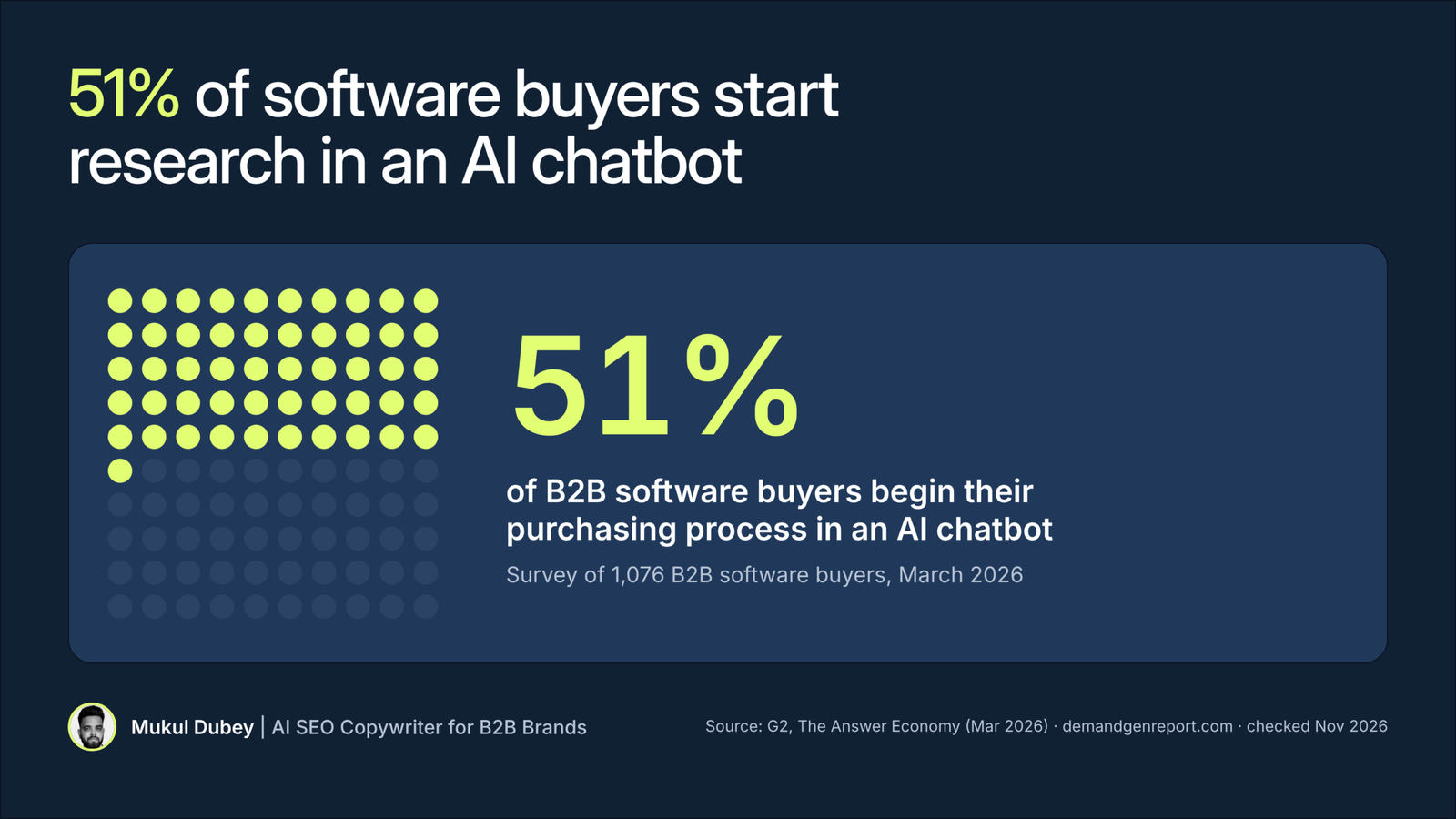
A required "How did you hear about us?" field on demo and contact forms captures sources that tracking software misses. Buyers often name word of mouth, podcasts, social posts, or AI assistant recommendations in that field.
Treat each self-reported answer as directional evidence and compare the answer with the CRM's first-touch source. Where the two sources disagree, the gap shows which channels your tracking cannot see.
Buyers who discover a brand through an AI assistant often appear in the CRM as direct traffic. The form answer may be the only proof that the deal belongs in marketing sourced pipeline.
Frequently asked questions about marketing sourced pipeline
What is a good percentage of marketing sourced pipeline?
A good marketing sourced share depends on the go-to-market motion. Inbound-led SaaS and product-led growth companies often see 50 to 60 percent, while account-based marketing motions see 5 to 20 percent.
Should inbound SDR opportunities count as marketing sourced pipeline?
An inbound SDR opportunity counts as marketing sourced when the first qualifying touch was a marketing activity, such as a demo form. An SDR deal that began with cold outreach counts as sales sourced instead.
What does marketing influenced pipeline mean?
Marketing influenced pipeline is the value of opportunities that marketing touched at any stage of the buying journey. The influenced number includes deals that sales, a partner, or a referral started.
Can you add marketing sourced and influenced pipeline together?
No, marketing sourced and influenced pipeline should never be added together. Every sourced opportunity is also an influenced opportunity, so the sum double counts the same deals.
What is a marketing pipeline?
A marketing pipeline is the system that tracks potential customers from their first interaction with a brand to closed revenue. Marketing sourced pipeline is the share of that system that marketing started.
Reporting pipeline credit as a lean B2B team
I recommend that lean B2B teams report marketing sourced pipeline and marketing influenced pipeline side by side on one scorecard. A combined total of the two numbers should never appear in any report.
Add the self-reported source next to both numbers, and review the edge-case rules with sales every quarter. A sourced number that everyone disputes is worse than having no sourced metric at all.
How can Mukul help lean teams turn content into sourced pipeline?
I help founders and lean B2B marketing teams build content that starts real deals, not just traffic. My work focuses on three areas that feed the sourced column.
- Bottom-of-funnel content: I write comparison and alternatives pages that convert buyers who are ready to talk.
- SEO and AI search: I write pages that rank in search and get cited by AI assistants.
- Pipeline-first plans: I build content plans around the pages that already start deals.
If your content needs to show up in the pipeline report, explore my services or get in touch. Together, we can turn the pages you already have into a reliable source of new deals.
Mukul Dubey
Mukul Dubey is a B2B SaaS content and SEO marketer who helps founders and lean marketing teams turn content into pipeline. He has 9 years of experience writing for SaaS, tech, and fintech brands, and he works at Simpplr. His work covers four areas: content strategy that drives pipeline, SEO copywriting that converts, AEO, GEO, and LLM visibility, and content tied to revenue. On this site, he shares practical guides for teams that want to rank on Google and get cited by AI search.
Connect on LinkedIn →Related posts
Ready to make content your best channel?
Let's build a strategy that ranks on Google and gets cited by AI.
Book a free consultation